Concrete Walkways and Sidewalks in Novato, CA
Concrete paths that stay firm under foot and move water away from the house.
GET A FREE QUOTE NOW!
Concrete walkways and sidewalks guide people through a property.
They connect the driveway, front door, side yard, patio, shed, and curb.
When the base is weak or the slope is wrong, paths crack, sink, and turn into trip hazards.
Nexus Concrete Novato installs and replaces concrete walkways and sidewalks for homes in and around Novato.
We look at grade, width, and use first, then build a path that fits your yard.
What are concrete walkways and sidewalks?
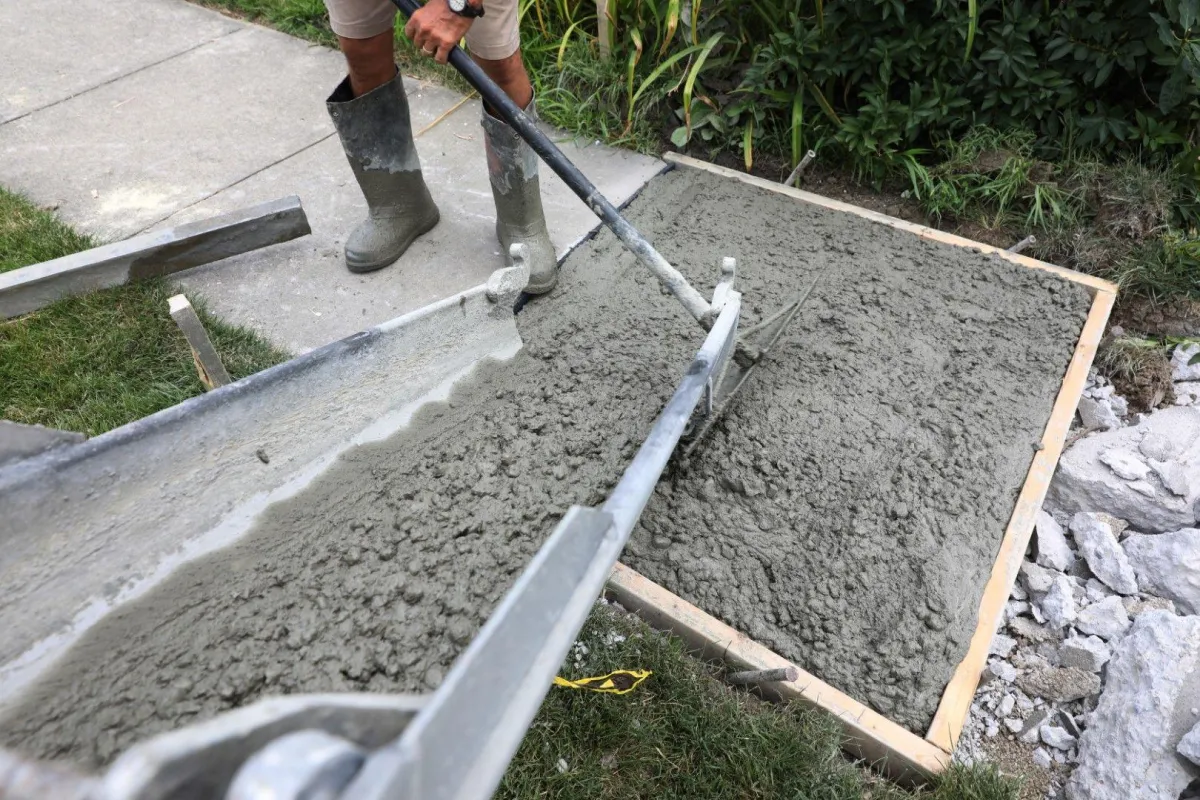
A concrete walkway is a path on private property. It often runs along the side of the house, around the back yard, or between a patio and a shed.
A concrete sidewalk sits near the street or along the front of the lot. It carries more foot traffic and sets the line between the yard and the public side.
Both need a compacted base, a slab of set thickness, and control joints on a clear layout. They also need enough slope to move water without feeling steep when you walk.
On each job we match the type of path to the way the space is used. Side yard access, delivery routes, and front entry all have different needs.
Where concrete paths make sense around a house
Walkways and sidewalks help tidy up all the little routes people take across a property. Instead of cutting through mud or wearing down the lawn, you get a clear, solid path that makes the yard easier to use.
Front entries usually benefit the most. A firm path between the driveway and the front door keeps shoes out of the mud and helps protect planting beds. We also set the width based on how people actually enter the house, with enough room for bags, strollers, or a cart.
Side yards are another common spot. They handle trash cans, tools, and access for work crews. A narrow strip of concrete along the house makes that trip easier and helps keep water moving away from the foundation. We pay attention to fence lines, doors, and gates so everything still opens the way it should.
In the back yard, short paths can connect a patio to a shed or a pool deck without turning the whole yard into concrete. A few runs in the right places keep grass from getting worn down and help guide drainage. We lay them out so water doesn’t end up trapped between slabs.
How we install walkways and sidewalks in Novato
A path can look simple, but it still needs real support under it. If the base is weak, the concrete will settle and the walkway won’t stay level.
We start by marking the route and the width. We watch how people move through the space now and where a new path would actually help. We also look at drainage. Where does water sit after rain, and where should it go instead?
Next we remove what’s there. That might be old concrete, grass, or soft soil. We cut to a set depth, then add base rock where needed and compact it well. This is what keeps the slab from sinking in the soft spots later.
Then we set forms along both sides of the run. The forms lock in the width and the slope. We also plan expansion points at steps, landings, and where the new walkway ties into other slabs.
Once the prep is right, we pour the concrete to the planned thickness. We strike it flat, float it, and apply the finish you chose. Control joints go in at steady spacing so cracks follow those lines. After curing, we pull the forms, dress the edges, and clean up the site.
Driveway details: finish, thickness, and drainage
Why walkways and sidewalks fail
Walkways and sidewalks often fail in small areas first. Roots lift panels, thin edges break, and water can wash out soil along one side.
When section replacement works
In some cases, we can cut and remove a bad section, rebuild the base, and tie a new panel into sound concrete. This works best when the rest of the path is level and the base is firm.
When full replacement makes more sense
If many panels tilt, sink, or lift, it usually points to wider base problems. In that case, full replacement makes more sense than patch work. We remove the old run, fix the base, and pour a new path with proper slope.
How we decide on site
During a visit we explain which approach fits your walkway or sidewalk. Safety, drainage, and long term use guide that choice.
GET A FREE QUOTE NOW!
Plan a walkway or sidewalk project
If you step around puddles, trip on uneven slabs, or walk through mud between key areas, concrete walkways or sidewalks can help.
We can walk the site, mark out a route and width, and show how new or rebuilt paths would work.
You deal with the contractor who will plan and oversee the path work.
Call Nexus Concrete Novato at (415) 798-9715 to set a site walk and get a concrete walkway or sidewalk plan for your property in Novato.
FREQUENTLY ASKED QUESTIONS(FAQ)
"How wide should a concrete walkway be?"
A simple access path can work at about 3 feet wide.
Near front doors or where two people pass, a wider path feels better and gives more room for carts and trash cans.
"Do walkways need to match the driveway or patio finish?"
They do not have to match, but it looks better when they relate.
We can use broom finish on all flatwork or add a small change in texture or saw cuts so paths tie into nearby slabs.
Construction
"How thick is a concrete sidewalk or walkway?"
Many residential paths use a 4 inch slab.
In some cases, near driveways, roots, or soft soil, we may thicken the slab or add more steel for strength.
"Can you work around tree roots?"
We look at each root zone on site.
In some spots we can shift the path or adjust depth.
In others we may remove roots and rebuild the base, or suggest a different route to protect the tree and the slab.
"When can I walk on a new concrete walkway?"
Light foot traffic can start after the first cure period that we explain on site.
We ask you to keep heavy loads and carts off the slab a bit longer so it gains strength.
"Can small cracks in a sidewalk be fixed without a full replacement?"
Hairline cracks that stay level often stay as a visual issue only.
We can seal some cracks as part of maintenance.
If slabs lift, drop, or cause trip hazards, we talk about removal and replacement of those panels.
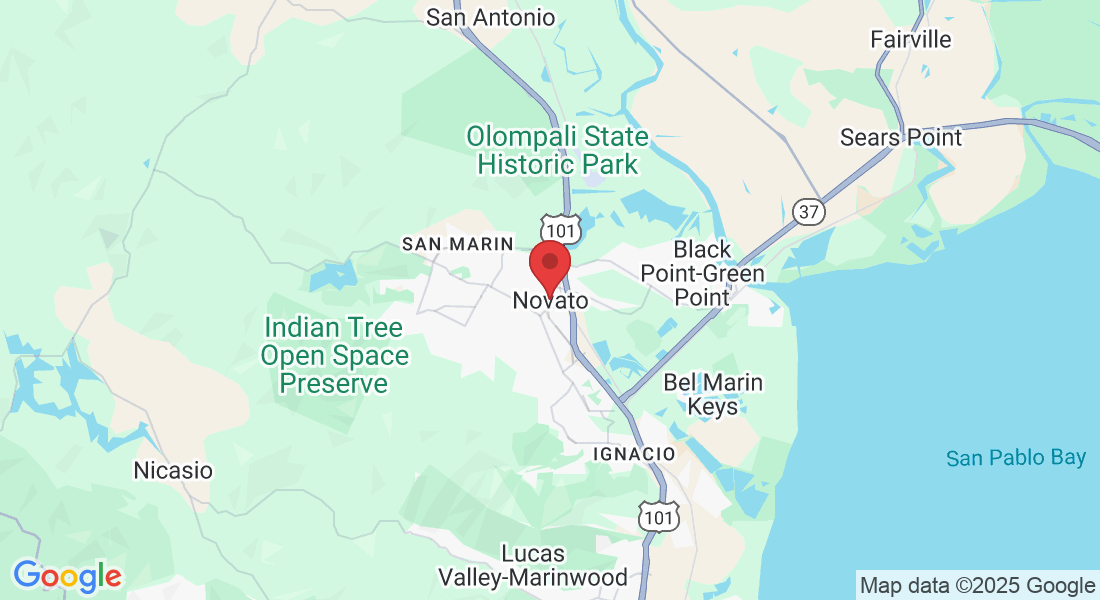
Novato, CA is our main service area.
Most of our concrete work sits inside the city and nearby neighborhoods.
Central Novato and downtown streets
San Marin
Ignacio and South Novato
Hamilton area
Bel Marin Keys and nearby pockets
LOCATION
Novato, CA
HOURS
Mon-Sat: 8am - 6pm
QUICK LINKS
COPYRIGHT © Novato, California
ALL RIGHTS RESERVED